Data Storytelling: This is the problem and This is the solution
Anjali Sharma
Director of Narrative
Published Date
March 8, 2017
Data Storytelling and a mistake we often make.
Less than 7 years ago, a Managing Director of a business retrieves data for the last 5 year's sales revenue. He calls his team and shows them that in Year 1 and Year 2 they performed exceptionally well. In Year 3, the revenue dropped a little and in Year 4 and Year 5, it dropped even more.
He tells the team that they need a "Rainmaker" in the business. Someone who can bring the revenue back to what it was in Year 1 and Year 2. Shortly after, a Rainmaker gets hired.
Sadly, 1 year later, the only change that happened is that he has had three Rainmakers come and go and revenue continues to drop.
What is going on here?
The problem is, most people look at the data and jump to solution mode.
Data tells us that teamwork is not good. Let us resolve this by doing team building exercises.
Data tells us that we don't have enough gender diversity in our team. Let us get some women into our workforce.
In this case, data tells us that we have declining sales. Let us get a Rainmaker.
The reality is different. In Year 3, three other major global competitors had come into the market and what was required was not a Rainmaker but a strategy on retaining clients.
If the Managing Director had interrogated the Data pattern, trend or anomaly, the Story would have sounded something like this:
In Year 1 and Year 2 we had great revenue and as you can see, in Year 3, 4 and 5 our revenues have consistently dropped. You know what happened in year 3? We had 3 other competitors enter the market who took our clients. Our market share reduced.
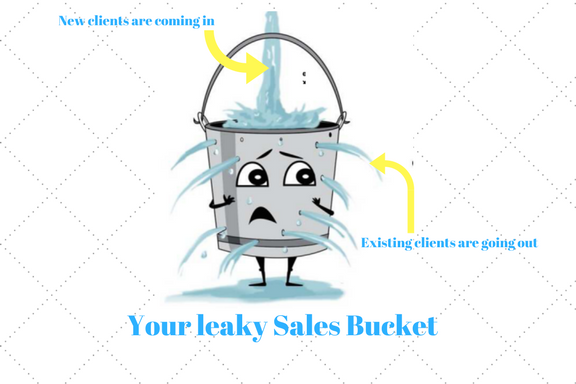
Interestingly, our new business generation remained the same for all 5 years, but we lost loyal retainer clients. What we need is strategy for retainer clients, not acquisition clients. We have a leaky bucket business where we are adding sales with new clients but losing sales from existing clients.
So what can we do?
Do not jump from Problem to Solution when Data Storytelling.
Ask yourself, "Why does the problem exist?" And that precisely is your insight/unexpected of the Data Story.
This article explores why storytelling is often misunderstood, why trusted advisors need more than logic alone, and how organizations can move from competing on price and execution to competing on insight and value.
Creating content for attention is easy. Creating content that builds lasting affinity is much harder. In this blog, I reflect on the difference between short-form and long-form content, why enduring work compounds over time, and what writing a book taught me about credibility, trust, and meaningful impact.
This article explores how resonance and unexpected moments make leadership storytelling more engaging, using a real transformation project called “Da Vinci” as an example.