Sam and his team, having worked hard to find an insight from data that they have received from their ecommerce team, finally find a meaningful insight after weeks of slicing and dicing the data.
Excited, they walk in to a presentation to share the insight.
Their presentation is structured like this:
- We are here to make the following suggestions for an ecommerce strategy
- The reasons we are making these suggestions are...
- And here is the insight from data that proves why we are making these suggestions
Sadly, Sam and his team do not get the reaction that they were expecting from their audience. What they thought was a brilliant presentation left the audience expressionless.
Why?
Because Sam and his team are forgetting that they have experienced the process of arriving to an insight, it speaks to them, it's their hard work, it's their slicing and dicing the audience.
The suggestions originated from the reasons. The reasons originated from the insights. The insights originated from the hard work of slicing and dicing the data.
It's almost like telling someone who has not run a marathon to appreciate the finisher tee that you are wearing after running a marathon.
So, what can one do in such a situation?
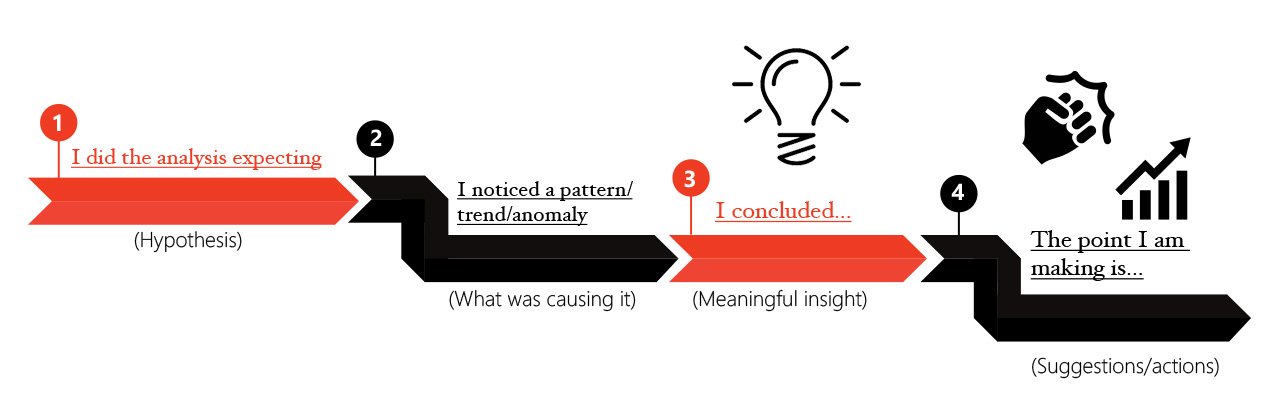
To have your audience appreciate what you can see is to take them through your process. Do not share suggestions but share how you arrived at those suggestions. If you can't make them go through the process with you, you can surely make them experience it by Data Storytelling.
Here are the steps you can follow:
Avoid the urge to suggest and share a story for desired outcomes.
This article explores why storytelling is often misunderstood, why trusted advisors need more than logic alone, and how organizations can move from competing on price and execution to competing on insight and value.
Creating content for attention is easy. Creating content that builds lasting affinity is much harder. In this blog, I reflect on the difference between short-form and long-form content, why enduring work compounds over time, and what writing a book taught me about credibility, trust, and meaningful impact.
This article explores how resonance and unexpected moments make leadership storytelling more engaging, using a real transformation project called “Da Vinci” as an example.